Top Bed Bug Hiding Spots in Your GTA Home

A bed bug can disappear into a gap thinner than a credit card. That is why finding the top bed bug hiding spots is rarely as simple as lifting a mattress and looking for a crawling insect. In Toronto and across the GTA, infestations often begin close to where people sleep, then spread quietly through furniture, clothing, and adjacent rooms.
If you are waking with unexplained bites, seeing small rust-coloured marks on sheets, or finding dark spotting near a bed, act quickly. Bed bugs multiply fast, and moving from room to room in search of them can make the problem harder and more expensive to treat.
Top Bed Bug Hiding Spots Around the Bed
The bed is the first place a trained inspector will examine, but it is not just the mattress. Bed bugs want to stay near a sleeping host while remaining protected from light, movement, and cleaning. They typically cluster in tight seams, joints, folds, and cracks.
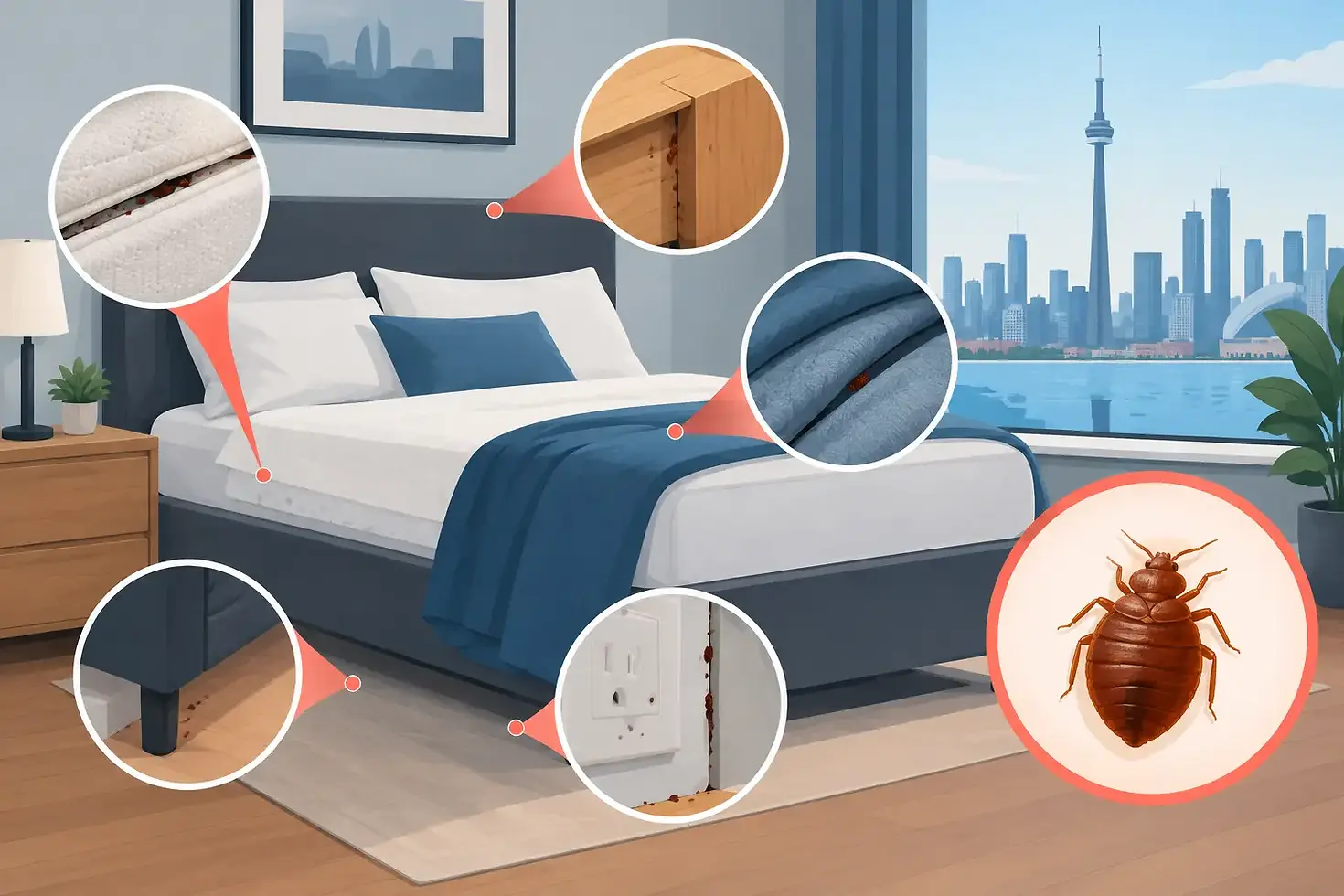
Mattress seams, piping, and labels
Check the stitching around the mattress, particularly near the head of the bed. Bed bugs, shed skins, tiny pale eggs, and dark fecal spots can collect along piping and beneath mattress labels. A mattress may look clean from the surface while harbouring activity inside a seam.
Do not assume a mattress encasement rules out an infestation. Encasements can help contain bed bugs when correctly installed and left in place, but bugs may still be living in the bed frame, headboard, or nearby furniture.
Box springs and bed frames
The underside of a box spring is a common hiding place, especially beneath its thin fabric cover. Bed bugs can occupy the wooden frame, stapled edges, corner guards, and small gaps around the structure. Metal bed frames are not immune either. Look closely at screw holes, hollow tubing, joints, and plastic caps.
Wooden bed frames give bed bugs even more cover. They often settle where rails meet the headboard, around bolts, inside cracks in unfinished wood, and behind decorative trim. Taking a frame apart without a treatment plan can disturb insects and spread them elsewhere, so inspection is the safer first move.
Headboards and wall-mounted frames
A headboard attached to the wall can conceal a surprising amount of activity. Bed bugs may hide behind it, in mounting hardware, around picture-frame moulding, or within the narrow space between the wall and the furniture. This is one reason a quick look at the mattress alone can miss the real source.
Furniture Near Where You Sleep
Bed bugs do not stay loyal to one piece of furniture. Once a population grows, they move outward from the bed to nearby items that offer darkness and narrow harbourage spaces.
Nightstands are high on the list. Inspect drawer joints, undersides, screw heads, handles, corners, and the back panel. The same applies to dressers, especially those positioned close to the bed. A bug can hide below a drawer or behind a loose backing where a homeowner may never think to look.
Upholstered chairs, sofas, recliners, and office chairs also deserve attention, particularly if someone naps or spends long periods there. Bed bugs may settle in cushion seams, under skirts, behind buttons, beneath armrests, and along the stapled fabric on the underside. In condos and apartments, a living-room infestation can become established even when the bedroom shows only limited signs.
The Overlooked Hiding Spots That Let Infestations Spread
Some of the most frustrating infestations are found outside the bed itself. These locations are easy to miss because they do not look like obvious pest hiding places, yet they offer the exact tight, undisturbed gaps bed bugs prefer.
Baseboards, flooring gaps, and wall cracks
Bed bugs can travel along baseboards and hide behind loose trim, cracked caulking, peeling wallpaper, or gaps around flooring. They may also use openings around electrical outlets, cable plates, switch covers, and heating pipes. This does not mean every outlet contains bed bugs, but it is a key inspection point when there are signs in more than one room.
In multi-unit buildings, wall voids and utility openings can complicate the situation. Bed bugs may move between suites through small gaps, especially when an infestation next door is untreated. Renters and landlords should report suspected activity early rather than trying to solve it quietly with sprays or discarded furniture.
Curtains, blinds, and window areas
Bed bugs are more likely to hide near a window when a bed, chair, or sofa sits nearby. Inspect curtain folds, hems, curtain rods, blind brackets, and the edges of window frames. They may also hide behind loose wallpaper or trim around the window.
This area is often missed during DIY checks because it feels too far from the mattress. But bed bugs will travel several metres for a blood meal, and a growing infestation expands beyond the closest hiding places.
Luggage, backpacks, laundry, and clutter
Bed bugs are excellent hitchhikers. Luggage seams, zippered compartments, backpacks, reusable shopping bags, and stored clothing can give them a route into or through a home. Piles of laundry and clutter do not cause bed bugs, but they create more places to hide and make accurate inspection harder.
Avoid moving bags, bedding, or furniture into another room until the problem is assessed. Do not put an infested mattress or chair out in a hallway, garage, or shared disposal area without proper precautions. You could spread the issue to neighbours or bring the bugs back inside later.
Signs You Are Looking at Bed Bugs, Not Something Else
Bites alone cannot confirm bed bugs. Skin reactions vary widely, and bites can resemble those from mosquitoes, fleas, or other insects. Some people show no visible reaction at all, even when bed bugs are present.
The stronger evidence is physical. Look for pepper-like dark spotting near seams and crevices, shed skins, small cream-coloured eggs, live insects, or reddish stains on bedding. Adult bed bugs are flat, oval, and brown, becoming more reddish after feeding. Young bed bugs are smaller and lighter, which makes them much easier to overlook.
A professional inspection matters because old stains and harmless insects can be mistaken for bed bug evidence. The reverse also happens: people see a single mark on a sheet, assume it is nothing, and give the infestation time to build.
Why Random Sprays Usually Miss the Real Problem
Store-bought sprays may kill a few exposed bed bugs, but exposed bugs are rarely the whole problem. The majority are concealed in the very cracks and furniture joints described above. Some products can drive bugs deeper into walls, furniture, or neighbouring rooms, making targeted elimination more difficult.
Whole-home heat treatment can be effective, but it can also be disruptive and costly when the infestation is confined to specific areas. The right approach depends on where activity is found, how long it has been present, the layout of the home, and whether there are shared walls or units involved.
Pestifight uses AI-guided detection to locate activity accurately before applying targeted heat treatment to infested areas. That precision can reduce disruption, protect belongings, and avoid paying to heat spaces that do not need treatment. With a 99.7% elimination rate and a 4-month guarantee, the focus is on solving the infestation, not selling more treatment than necessary.
What to Do When You Find a Suspected Hiding Spot
Do not panic, and do not start carrying items through the home. Take a clear photo if you can do so without disturbing the area, keep the room in normal use, and arrange an inspection. Continuing to sleep in the usual room may feel uncomfortable, but suddenly moving to a sofa or spare bedroom can give bed bugs a new feeding location.
A free professional inspection can confirm whether the signs are bed bugs, identify the active hiding areas, and determine whether treatment is needed. For GTA homeowners, renters, and landlords, early detection is the difference between a contained bedroom issue and a larger property-wide problem.
If something near your bed does not look right, trust that signal and get it checked before the bugs get more hiding places.


Comments